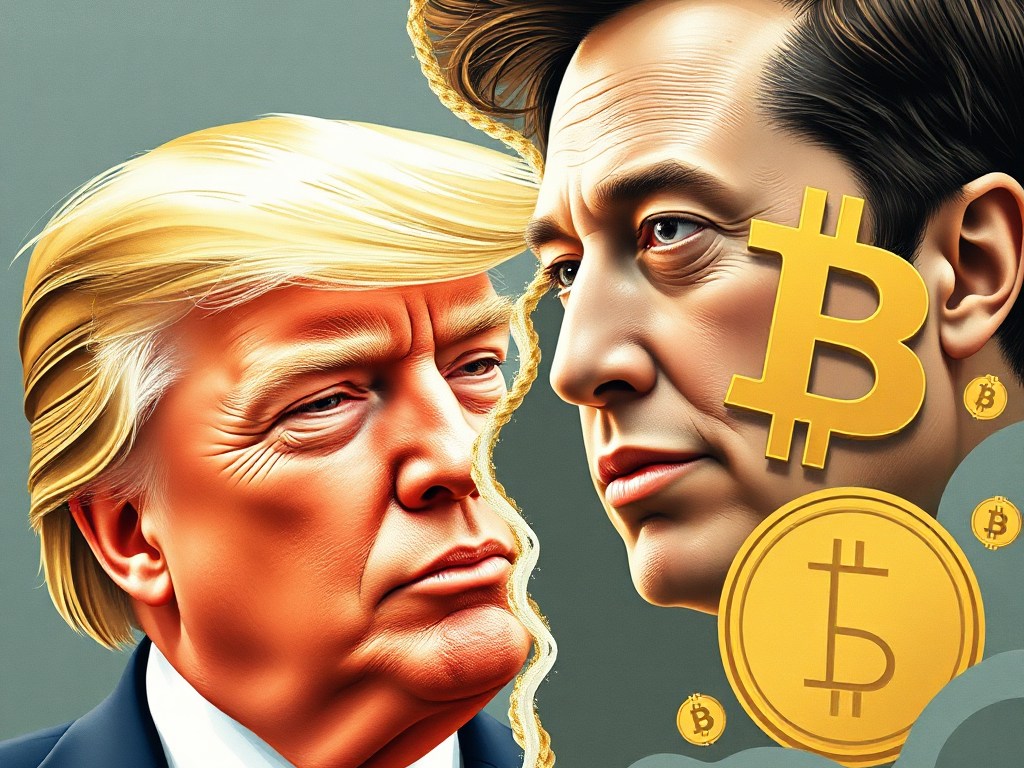
Cryptocurrencies have emerged as a revolutionary force in the global financial system. From the creation of Bitcoin in 2009 to the explosion of altcoins and decentralized finance, these digital assets have captured the imagination of millions. However, their volatility and speculative nature make them highly susceptible to external influences. Among the key figures shaping this market are Elon Musk, the visionary CEO of Tesla, and Donald Trump, the former U.S. president.
While Musk serves as a vocal promoter of certain cryptocurrencies, Trump has positioned himself as a skeptic. Despite their contrasting approaches, both men have had profound and far-reaching impacts on the crypto market. This article delves into their respective roles, the mechanisms through which they influence cryptocurrency prices, and the implications for investors navigating this unpredictable market.

Elon Musk: The Crypto Showman
A Tech Pioneer’s Love Affair with Cryptocurrencies
Elon Musk is synonymous with innovation and disruption, and cryptocurrencies are no exception. Known for his affinity for cutting-edge technologies, Musk has consistently leveraged his massive social media following to express his views on crypto.
The Dogecoin Phenomenon
One of the most striking examples of Musk’s influence is his promotion of Dogecoin, a cryptocurrency initially created as a joke in 2013.
- Musk began tweeting about Dogecoin in 2021, sharing memes and calling himself the « Dogefather. »
- His tweets and public endorsements caused Dogecoin’s price to surge by over 700% in weeks, turning it into a serious contender in the crypto world.
- However, his appearance on Saturday Night Live in May 2021, where he jokingly referred to Dogecoin as a « hustle, » triggered a 30% price drop, exemplifying how even light-hearted comments can ripple through the market.
Tesla and Bitcoin: A Rollercoaster Ride
In early 2021, Tesla announced it would accept Bitcoin as payment for its electric vehicles, propelling the cryptocurrency’s value to an all-time high of over $60,000. However, Musk later reversed this decision, citing environmental concerns over Bitcoin mining. This U-turn caused a sharp market downturn, illustrating Musk’s dual role as both a supporter and a disruptor.
Mechanisms of Musk’s Influence
- Social Media Reach: With over 140 million followers on Twitter (as of 2024), Musk’s tweets often spark widespread reactions.
- Cult-Like Following: Many investors view Musk as a tech prophet, amplifying the market’s sensitivity to his opinions.
- Legitimizing Emerging Cryptos: Musk’s support lends credibility to projects like Dogecoin, attracting mainstream attention.
Criticism and Controversy
Critics argue that Musk exploits his platform to manipulate markets, whether intentionally or not. His erratic statements have fueled extreme volatility, leaving retail investors exposed to significant risks. Regulators have also scrutinized his actions, though proving market manipulation remains challenging.
Donald Trump: A Crypto Skeptic
A Conservative Stance Against Digital Assets
In contrast to Musk, Donald Trump has consistently voiced his opposition to cryptocurrencies. As president and even after his tenure, Trump has labeled digital currencies as speculative, dangerous, and a threat to the dominance of the U.S. dollar.
In a 2019 tweet, Trump stated:
« I am not a fan of Bitcoin and other cryptocurrencies, which are not money and whose value is highly volatile. Unregulated crypto assets can facilitate unlawful behavior. »
He further emphasized his belief in the supremacy of the U.S. dollar, warning that cryptocurrencies could undermine America’s economic position globally.
Indirect but Powerful Impact
Trump’s rhetoric has had a more indirect influence on the crypto market compared to Musk’s immediate and dramatic effects:
- Regulatory Implications: His administration’s skepticism set the stage for regulatory scrutiny in the U.S., creating a cautious environment for institutional adoption.
- Shaping Public Perception: Trump’s criticism resonated with conservative audiences, reinforcing doubts about the viability and safety of cryptocurrencies.
Contradictions in His Approach
Despite his vocal opposition, Trump’s ventures into digital assets raise eyebrows. For instance, the release of Trump-themed NFTs (non-fungible tokens) contradicts his critical stance, highlighting a pragmatic, if hypocritical, approach to leveraging emerging trends for personal gain.
Key Lessons for Investors
- Stay Informed About Key Influencers
The crypto market’s dependence on external influences underscores the need for vigilance. Investors should closely monitor statements from high-profile figures like Musk and Trump, as they can significantly sway market sentiment. - Understand the Risks of Volatility
Musk’s tweets and Trump’s rhetoric exemplify how quickly the crypto market can shift. To mitigate risks, investors should avoid emotional trading and be prepared for sudden price swings. - Regulation as a Double-Edged Sword
While Trump’s critiques have spurred greater regulatory scrutiny, such measures could stabilize the market over time. Investors should track regulatory developments, particularly in major markets like the U.S. - Adopt a Long-Term Perspective
Reacting impulsively to news can lead to significant losses. A well-researched, long-term investment strategy is essential in navigating the unpredictable crypto landscape.
Conclusion: Two Forces Shaping the Crypto Market
Elon Musk and Donald Trump, though starkly different in their approaches, have left indelible marks on the cryptocurrency market. Musk’s enthusiasm and high-profile endorsements have introduced millions to digital assets, while Trump’s skepticism has fueled debates about their risks and regulatory frameworks.
Their influence highlights the importance of external factors in shaping crypto prices, often overshadowing traditional market dynamics. For investors, understanding these dynamics is crucial to making informed decisions and managing risks effectively.
As cryptocurrencies continue to evolve, the interplay between tech visionaries like Musk and political figures like Trump will undoubtedly remain a defining feature of this volatile and transformative market. Whether one views them as catalysts or disruptors, their impact underscores the growing intersection of technology, politics, and finance in the 21st century.
 CRYPTO CASH LIST